



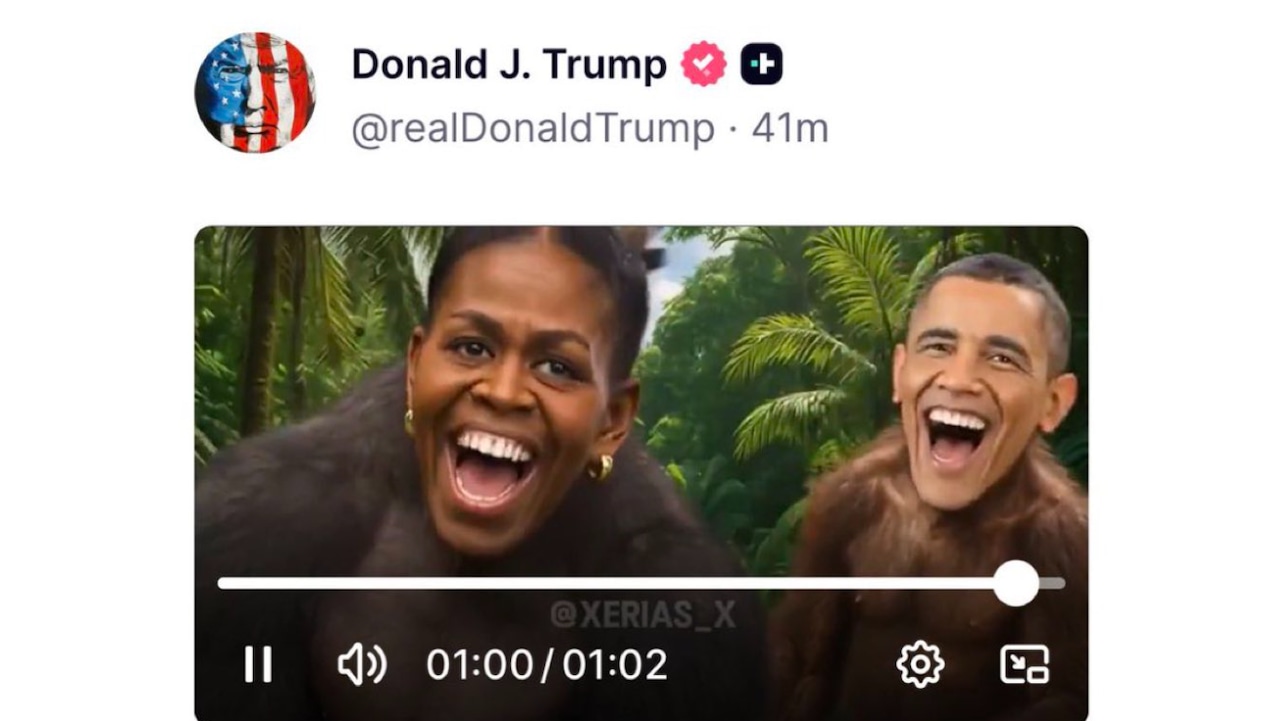
Trump’s Racist Obama Monkey Video: An In-Depth Look
In recent news, a video shared by former President Donald Trump depicting Barack and Michelle Obama as monkeys has sparked significant outrage across social media and political circles. This post highlights the complexities of race relations in America while examining the video’s implications and the criticism it has received from various quarters. As HR professionals and business leaders, understanding the societal impacts of such media representations is crucial.
The clip, which Trump initially defended but later deleted, illustrates a disturbing trend where racial stereotypes resurface, particularly in political rhetoric. The insulting video has been called ‘disgusting’ and a sign of ‘racism’ by critics, including members from both political parties. The reaction hints at a deeper societal division over race imagery and the dismissal of the historical implications such imagery carries.
The Historical Context of Racism in Media
The usage of monkey-related imagery to depict Black individuals dates back centuries, often serving as a method to dehumanize and reinforce harmful stereotypes. Such representations have been used in various forms, from political cartoons to social media memes, perpetuating a destructive narrative that continues to manifest in contemporary society.
Trump’s video specifically connects with this troubling history. According to BBC, the video depicted the Obamas as primates, an imagery that many saw as a blatant racist smear. It is essential for executives and managers in any organization to understand these nuanced issues and their ramifications.
Public Reactions and Impact on Civil Discourse
Following the backlash to the video, influential figures such as Senator Tim Scott condemned the post, calling it “the most racist thing I’ve seen out of this White House.” This statement underscores the potential damage such portrayals can inflict on public discourse, which often spills over into corporate culture and workforce dynamics.
The backlash from communities and civil rights groups has been swift and significant, showcasing a unity against racism that transcends party lines. The PBS report points out that the White House initially defended Trump’s post, labeling the opposition as ‘fake outrage’, further complicating how organizations deal with issues of race and representation.
The Role of Corporate Leaders
In light of such events, leaders must thoroughly consider how they address these issues within their teams and organizations. Failing to acknowledge the potential fallout from racially charged rhetoric can lead to not only a backlash from clients and customers but also create workplace environments that foster division rather than inclusivity.
As business leaders, you can take active steps to create a more respectful and understanding work environment by implementing diversity and inclusion training, facilitating open dialogue among employees about race, and ensuring that company policies align with a broader commitment to equality.
Moving Forward: Lessons to Learn
Ultimately, the video shared by Trump serves as a poignant reminder of the continuing relevance of race in American society. By confronting these issues head-on and promoting a culture of respect and understanding, companies can not only avoid mistakes but also stand as leaders against racism in their communities. Emphasizing empathy, education, and awareness is crucial in addressing such delicate topics in a constructive way.
Conclusion
The portrayal of the Obamas as monkeys is more than just a meme; it’s a reflection of deep-seated societal issues that require attention from all sectors of society, including business. It emphasizes the need for leaders to not only acknowledge the past but actively work towards a better understanding and future.