



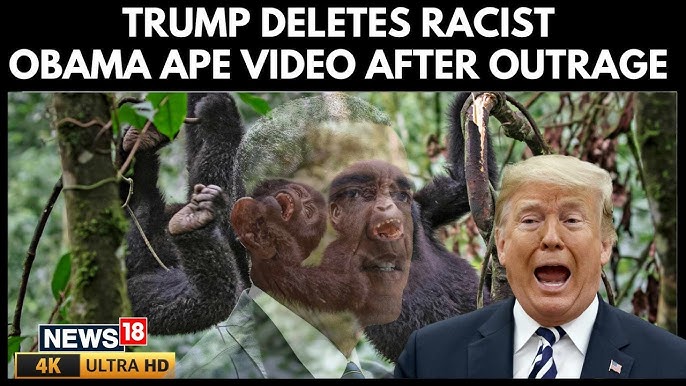
Trump’s Apology Over Racist Video Depicting Obama and Michelle as Apes
Recently, Donald Trump stirred up significant controversy by sharing a video on his social media platform that depicted former President Barack Obama and former First Lady Michelle Obama as apes. This posting, which was met with immediate backlash from various political and social groups, has highlighted ongoing racial tensions and the responsibilities of public figures when it comes to sensitive topics.
A Closer Look at the Incident
Reports indicate that Trump’s video was intended to question the legitimacy of the 2020 presidential election. However, it included graphic imagery that many considered racist, depicting the Obamas as primates within a jungle backdrop. The video drew instant condemnation not only from civil rights organizations but also from members of Trump’s own political party, who labeled it as offensive and uncharacteristic of appropriate political discourse.
The backlash was swift, prompting even some Republican leaders to speak out vigorously against the post. Senator Tim Scott, the only Black Republican senator, described it as the “most racist thing” he had seen from the Trump administration. The uproar surrounding the video prompted a rapid response from the White House, which initially defended the post before ultimately deciding to remove it due to the negative reactions it received.
Reactions from the Political Sphere
Many prominent figures from the Republican Party expressed their dismay regarding Trump’s actions. They emphasized the need for the party to move past such “appalling” displays that contradict efforts to reach diverse demographics. The reactions revealed a growing concern that Trump’s public statements could alienate future voters, particularly those in minority groups.
The President’s post had originally been defended by his aides, who referred to the outrage as “fake outrage”. However, the video was taken down after persistent pressure from various factions, including civil rights leaders and political pundits. Notably, the Republican National Committee and other influential GOP members have since distanced themselves from the video, reinforcing that it does not reflect their values.
The Broader Impact of Racism in Politics
This incident is not merely a reflection of one person’s actions but rather a symptom of a larger issue within political circles and society as a whole. Racism, or even the perception of it, can have severe repercussions not just for individuals but also for political parties and electoral processes. The sharing of such content can perpetuate stereotypes and divide communities, undermining efforts toward unity and cooperation among diverse groups.
Going forward, it is imperative that leaders from all sides of the political spectrum take a firm stand against racist and inflammatory content. Creating a political environment where such imagery is routinely dismissed could foster more inclusive and thoughtful conversations around vital national issues.
Conclusion: Moving Forward
In light of this recent incident, it is essential for all political figures and entities to be mindful of the potential impact that their communication strategies and public presentations can have. There is great responsibility in leadership, and public figures must remember that their words and images matter immensely in shaping public perception and sentiment.
The case of Trump’s video serves as a warning of the dangers of utilizing sensationalist tactics for political gain, especially when they tread into deeply offensive territory. As Trump’s actions reverberate across social platforms and news outlets, they may also serve as a catalyst for broader discussions about the role of social media in politics and the need for accountability when it comes to public communications. To learn more about the incident, you can watch the video explanation [here](https://www.youtube.com/watch?v=4kI-usDUR_Q).