



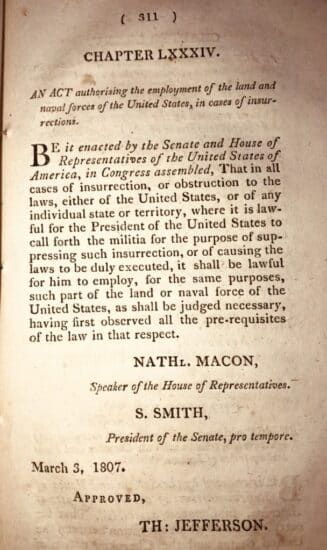
What is the Insurrection Act?
The Insurrection Act, a crucial piece of legislation in the United States, was initially enacted in 1807. This act authorizes the President to use the U.S. military and federal law enforcement to suppress civil disorder, insurrection, and rebellion. In recent years, with the rise of public unrest, the Insurrection Act has garnered significant attention. Let’s explore what the Insurrection Act entails, its historical context, and its implications on current governance.
Historical Background of the Insurrection Act
The origins of the Insurrection Act date back to 1807, when it was signed into law by President Thomas Jefferson. It intended to provide a legal framework for the federal government to respond to insurrections. This act is part of a larger body of law concerning military powers and the protection of civil authority. The significance of the Insurrection Act lies not only in its historical purpose but also in its adaptability to meet contemporary challenges.
Key Provisions and Mechanism
The Insurrection Act allows for the deployment of U.S. armed forces domestically to restore public order when state authorities are unable or unwilling to do so. The President must first issue a proclamation ordering insurgents to disperse and can only employ military force as a last resort. Furthermore, the act can be triggered at the request of a state governor or by the President’s own initiative in times of crisis.
Notable Historical Instances
Throughout history, the Insurrection Act has been invoked during periods of civil unrest. One of the most notable instances was during the Civil Rights Movement in the 1960s, when President Eisenhower deployed federal troops to Little Rock, Arkansas, to ensure the integration of public schools. More recently, in 1992, President George H.W. Bush used the act during the Los Angeles riots, highlighting its role in federal intervention during crises.
Contemporary Relevance and Debates
In the wake of events such as the racial justice protests in 2020 and the unrest following the 2020 Presidential election, discussions surrounding the Insurrection Act have resurfaced. Some argue for its use to maintain order, while others express concern over the potential for abuse of power. This ongoing debate raises questions about the balance between federal intervention and states’ rights.
Legal Interpretations and Challenges
Legal scholars have debated the extent to which the Insurrection Act can be applied in modern contexts. Critics argue that too broad an interpretation may undermine civil liberties, while advocates assert that the act is essential for maintaining public safety. Courts have historically been cautious in addressing these issues, recognizing the delicate balance between order and liberty.
Implications for Business and Society
Understanding the Insurrection Act is vital for leaders in business and society, as civil disorder can significantly impact economic stability and organizational operations. Companies must navigate these complex environments while advocating for both social responsibility and stability. The repercussions of unrest can disrupt supply chains, affect employee safety, and alter the broader economic landscape.
Conclusion
The Insurrection Act remains a significant and contentious element of U.S. law, reflecting the ongoing struggle between federal authority and individual rights. As we observe contemporary social movements, it is crucial to consider the implications and responsibilities that accompany such legal powers. A deeper understanding of its provisions and impact can equip business leaders and HR professionals to respond effectively to crises and advocate for a balanced approach to governance.
For more detailed information about the Insurrection Act, please visit Zinn Education Project.