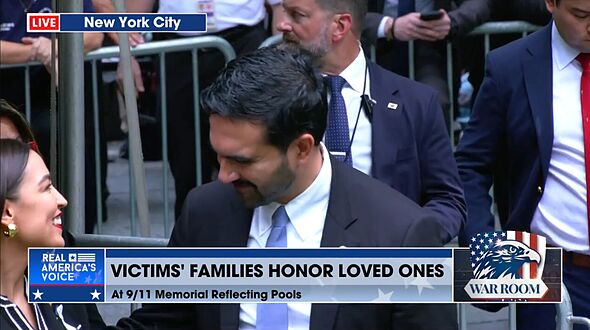
On September 11, 2026, a video featuring New York City Mayor Zohran Mamdani and Representative Alexandria Ocasio-Cortez (AOC) at the 25th anniversary 9/11 memorial ceremony began circulating widely on social media. The clip purported to show the two public figures laughing as names of 9/11 victims were read. The ‘AOC Mamdani 9/11 video’ drew swift condemnation, but careful analysis of primary sources and eyewitness accounts indicates the claims about their behavior were misleading and taken out of context.
The Footage and Its Immediate Aftermath
The controversy began after Fox News aired a segment with footage of AOC and Mamdani briefly greeting and sharing what appeared to be a light moment during the ceremony (tech-news coverage). The video was quickly amplified by partisan social media accounts and high-profile politicians, including Senator Ted Cruz, who questioned how any public official could laugh during such a solemn occasion, as reported by NewsBusters and The Washington Times.
Republican commentators charged that Mamdani and AOC were disrespecting the ceremony. Outrage spread rapidly, with viral posts on X (formerly Twitter) generating over 50,000 mentions within hours. However, as the story developed, several key facts emerged challenging the initial narrative.
Context: What the Video Actually Shows
An independent review by CNN revealed that the viral ‘AOC Mamdani 9/11 video’ captured a brief interaction at the start of the commemoration. According to multiple witnesses, including Michael Ragusa, a former Giuliani aide who stood beside them, the two exchanged a greeting and a brief smile—no audible laughter occurred during the reading of victims’ names.
“That video is her greeting the mayor and that’s it,” Ragusa posted, emphasizing that both remained respectful throughout the two-hour ceremony (The New Republic). Additional footage showed politicians from both major parties conversing and using their phones quietly during the service.
Social Media Reaction and the Challenge of Viral Outrage
Within hours of its release, the video was excerpted, given sensational captions, and presented as evidence of disrespect. Supporters of AOC and Mamdani pointed out that the clip was misleading, while critics remained unswayed by subsequent clarifications. The debate highlighted the power of video context collapse—when short snippets, removed from the full setting, drive controversy.
Several news outlets reported that Mamdani and AOC had faced criticism relating not just to their demeanor but also to past comments about 9/11 and U.S. foreign policy. However, fact-checkers from CNN and The New Republic found no evidence the two were disrespectful or laughing during the core memorial proceedings.
Eyewitness Accounts and Media Analysis
Multiple individuals present at the event, including security personnel and 9/11 families, reported no audible disturbance from either politician during the remembrance. Footage reviewed by major networks supports the claim that the moment of greeting was brief and isolated. CNN emphasized that “videos of the two leaders ‘laughing’ are not true” and that reactions were “taken out of context.”
This assessment matches statements by attendees and even some critics, who noted that the intensity of online coverage rarely correlated with the reality on the ground. Social media, therefore, amplified a controversy rooted in a moment unreflective of the solemn tone of the event overall.
The Technology Behind Viral Video Manipulation
This incident illustrates how short video clips can go viral and trigger widespread outrage, particularly when context is omitted. The “AOC Mamdani 9/11 video” was selectively edited and shared with highly charged captions to prompt a reaction. Dissonance between full-length video and curated social snippets is fast becoming a recurring challenge for public figures, especially in an era when AI and algorithmic systems boost controversial content.
Fact-checking organizations increasingly use machine learning to verify video context and metadata. Tools for identifying cuts, timestamps, and background sound are now critical for journalists and audiences alike (see more technology news).
Lessons for Media and Public Accountability
The rapid spread of the ‘AOC Mamdani 9/11 video’ and its subsequent debunking underscore the importance of media literacy, especially during highly sensitive public events. Context collapse, intentional or not, can have lasting reputational and political effects.
Moreover, reliance on partial video evidence—whether for political advantage or by mistake—can distract from the actual significance of commemorative events and the shared goal of public remembrance. In this case, careful reporting, corroborated by multiple credible sources, shows how misleading narratives can be rapidly amplified, but also responsibly corrected.
Frequently Asked Questions
- What does the “AOC Mamdani 9/11 video” actually show?
- The video depicts AOC and Mamdani briefly greeting each other; no evidence supports claims of laughter or disrespect during the reading of victims’ names.
- How did credible sources verify the context?
- Eyewitnesses, security staff, and media reviews confirmed the interaction was a short greeting—fact-checkers found no misconduct.
- Why did the video go viral?
- Short, contextless clips provoke emotional responses and are rapidly shared on social platforms, especially on politically charged anniversaries.
- How can the public check similar incidents in the future?
- Seek full-length footage, reliable fact-check reports, and statements from multiple eyewitnesses before drawing conclusions.
- Has video manipulation become a common political weapon?
- Yes. Viral videos—with or without misediting—can drive public outrage or misinformation. Reverse-search and metadata tools help clarify full context.